
Robin Vassantlal, Hasan Heydari, Bernardo Ferreira, and Alysson Bessani, LASIGE researchers, published a paper titled “MVP-ORAM: a Wait-free Concurrent ORAM for Confidential BFT Storage”, at the 33rd Network and Distributed System Security (NDSS) Symposium, a top cybersecurity conference (Core A*).
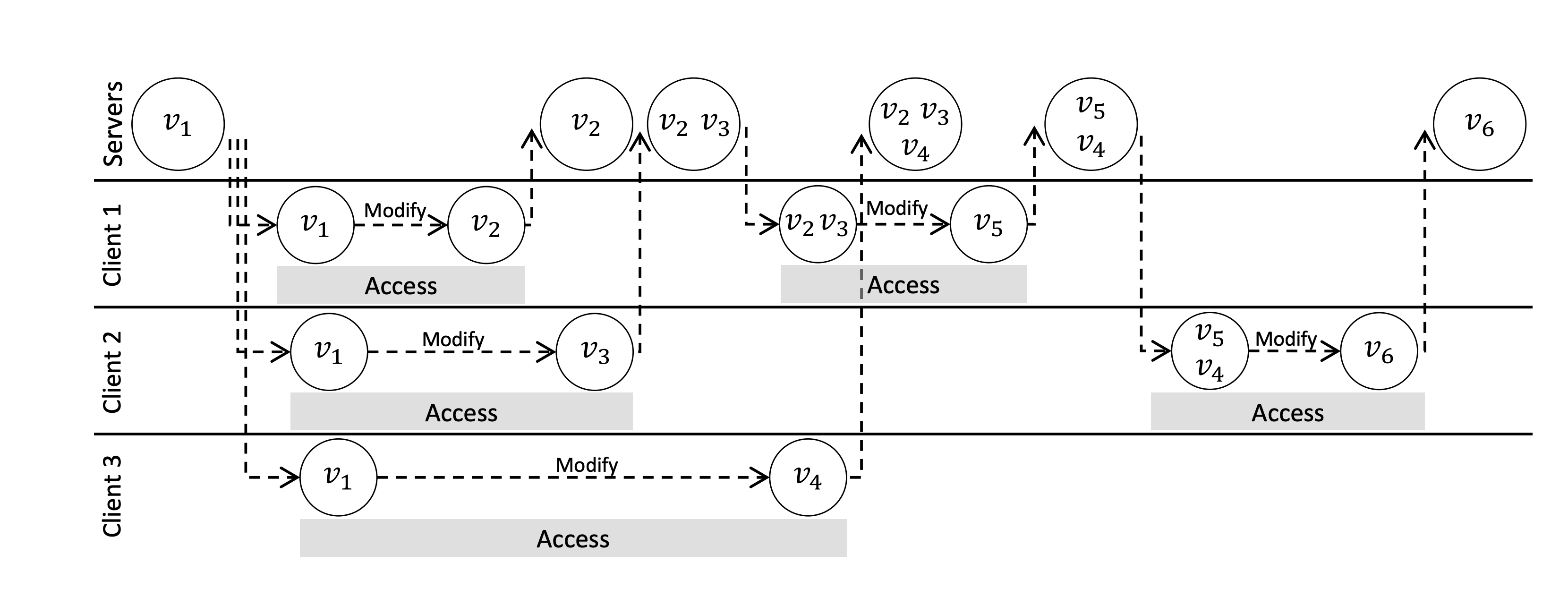
This paper proposes a method for hiding access patterns to data stored on secure replicated services. Typically, secure replication (called Byzantine Fault-Tolerant State Machine Replication, or BFT-SMR) ensures integrity and availability of a service even if a fraction of the replicas fail or are controlled by an adversary. Confidential BFT-SMR systems like COBRA (a previous confidential BFT-SMR library developed by the team) additionally ensure data privacy by encrypting data and secret sharing encryption keys. However, the way that clients access the data still reveals a lot about it and may be used in inference attacks. MVP-ORAM hides these access patterns by combining Oblivious RAM (ORAM), a technique that fetches multiple data blocks with each access and continuously reshuffles data, with confidential BFT-SMR. However, existing ORAM protocols were not ready for integration with BFT-SMR, as they typically rely on inter-client synchronisation and communication, limiting concurrency and preventing the support for failure-prone clients. Hence, MVP-ORAM was designed to be the first concurrent wait-free ORAM, ensuring support for failure-prone clients and easy integration with confidential BFT-SMR.
The paper is available here: https://www.ndss-symposium.org/wp-content/uploads/2026-f1809-paper.pdf.